
UI/UX Design | Product Co-Founder | Fashion Technology | UK Market
Co-Founding and Designing an AI-Powered Garment Intelligence Platform: MakeFit AI
Co-founder and Lead Designer | UI/UX, Interaction Design, Motion Design
Pankajkumar Mori, Founder and Director
THE PROBLEM
Online clothing retail has a persistent and costly problem: customers cannot try clothes before they buy. Returns rates in UK fashion e-commerce consistently run above 30%, driven largely by fit issues. Customers guess their size, order multiple sizes to try at home, and return what does not fit. For retailers, this means logistics costs, restocking costs, and unsold returned inventory. For customers, it means inconvenience and disappointment.
Size guides and measurement charts help, but they do not account for how a specific garment is cut, how fabrics behave on different body types, or the variation between brands. The problem is not that customers do not know their measurements. It is that measurements alone do not predict fit.
THE OPPORTUNITY
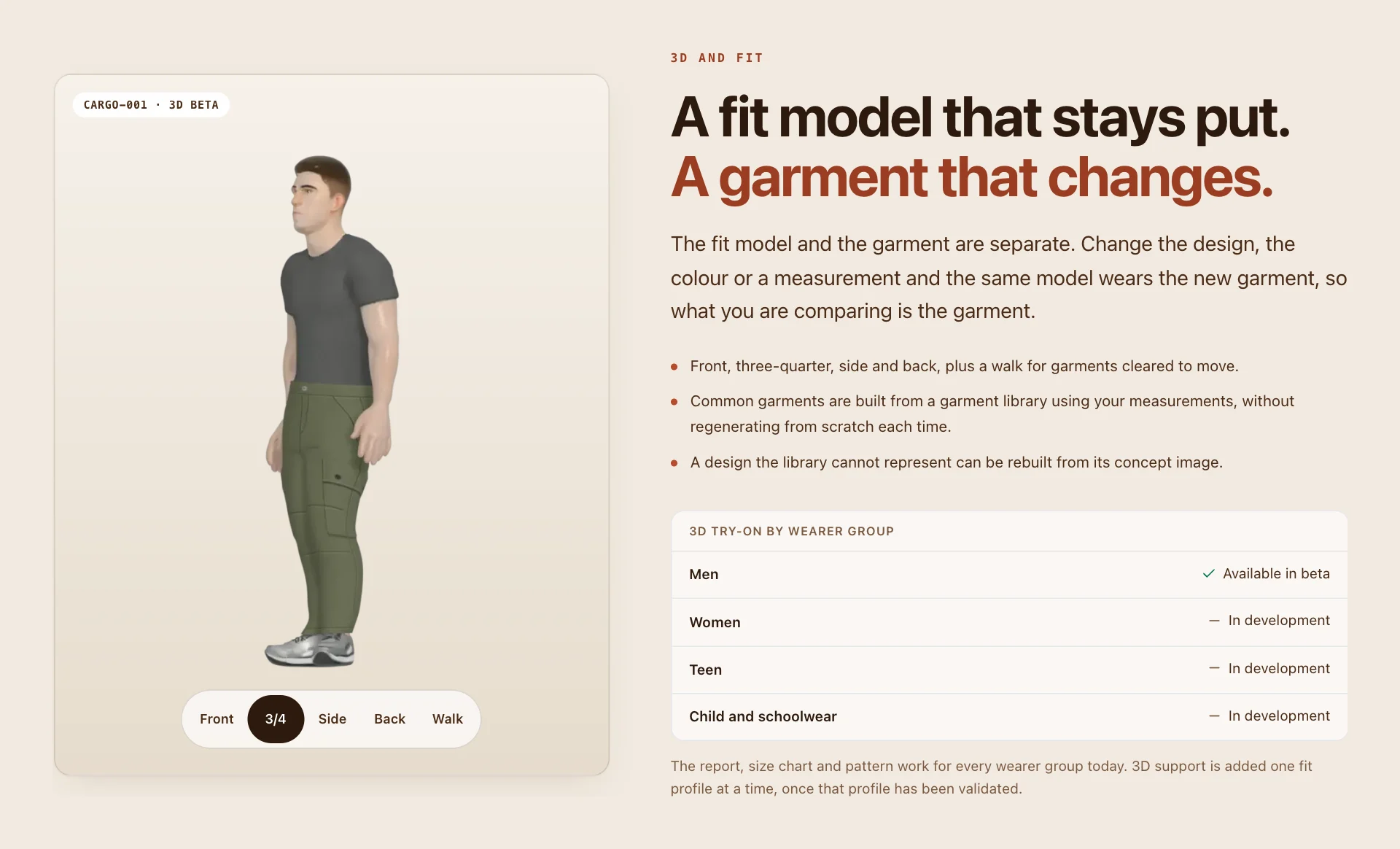
Arslan Sultan, a garment specialist with direct expertise in how clothing is constructed and how fit is assessed professionally, identified that AI could bridge this gap in a way that size charts cannot. The concept was an AI-powered platform that could analyse garment construction data alongside a customer’s measurements and body shape to predict fit accurately, before purchase.
He brought me on as co-founder to lead the product design. My role was to translate a technically complex AI-driven concept into an interface that would be intuitive for both the end customer and the retailers integrating it into their e-commerce operations.
MY ROLE
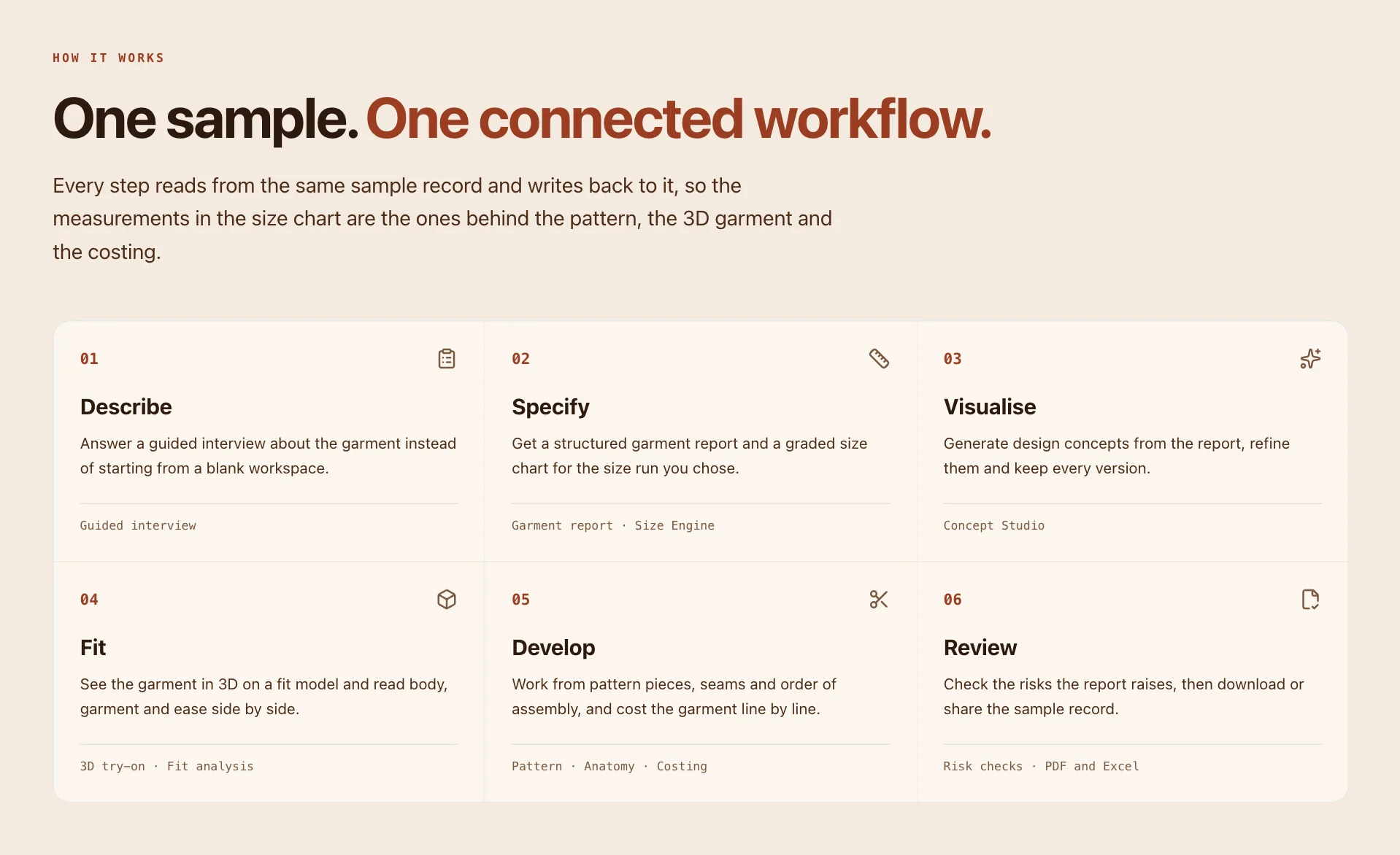
As co-founder and lead designer, I was responsible for the complete UI/UX of the platform: user research and journey mapping, information architecture, interaction design, visual design, and the motion design used in product promotion. I worked directly with Arslan, whose garment expertise shaped the logic of the fitting model, while I shaped how that logic was presented to users.
This was not a client brief I was executing. It was a product I was building from the ground up with a co-founder, which meant every design decision had to balance user clarity, technical feasibility, and commercial positioning in the UK fashion and e-commerce market.
THE DESIGN APPROACH
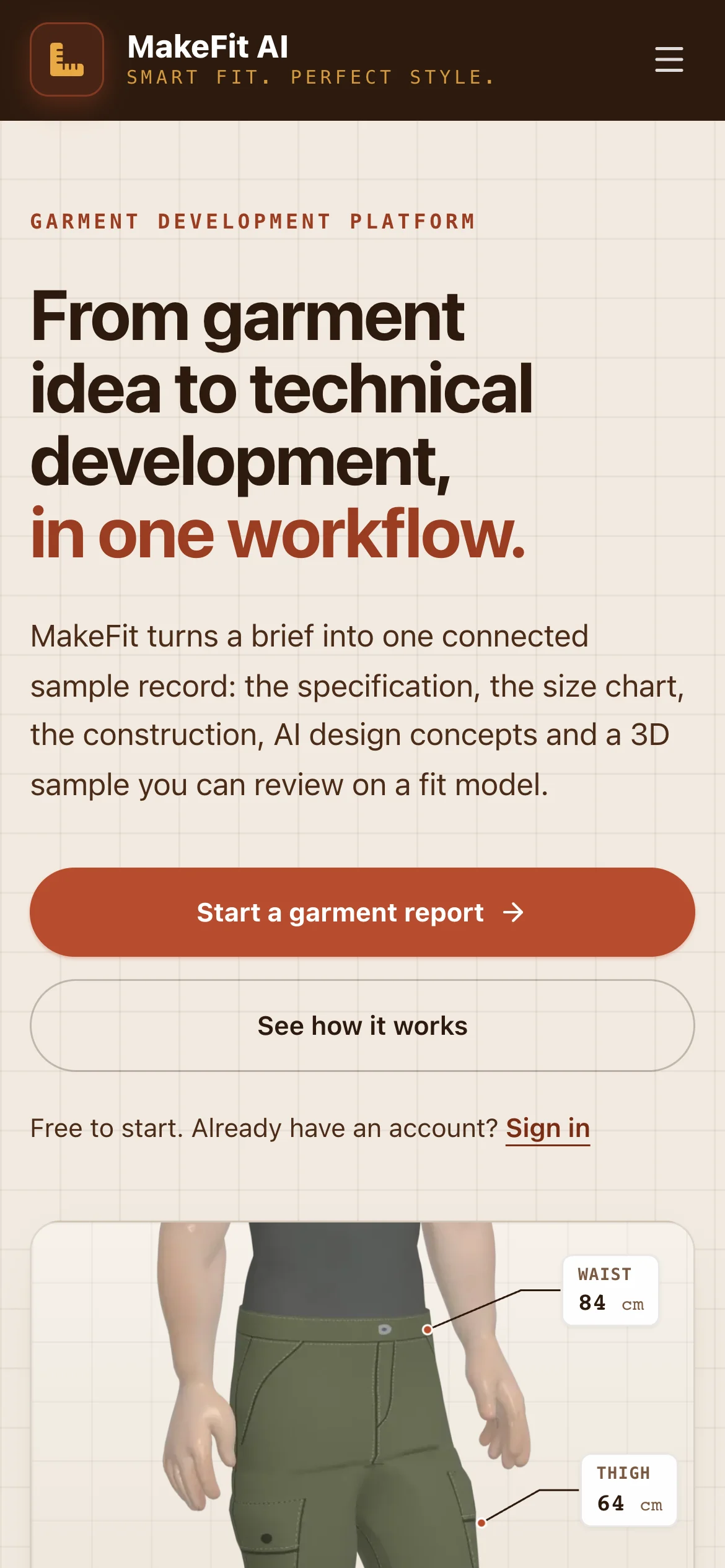
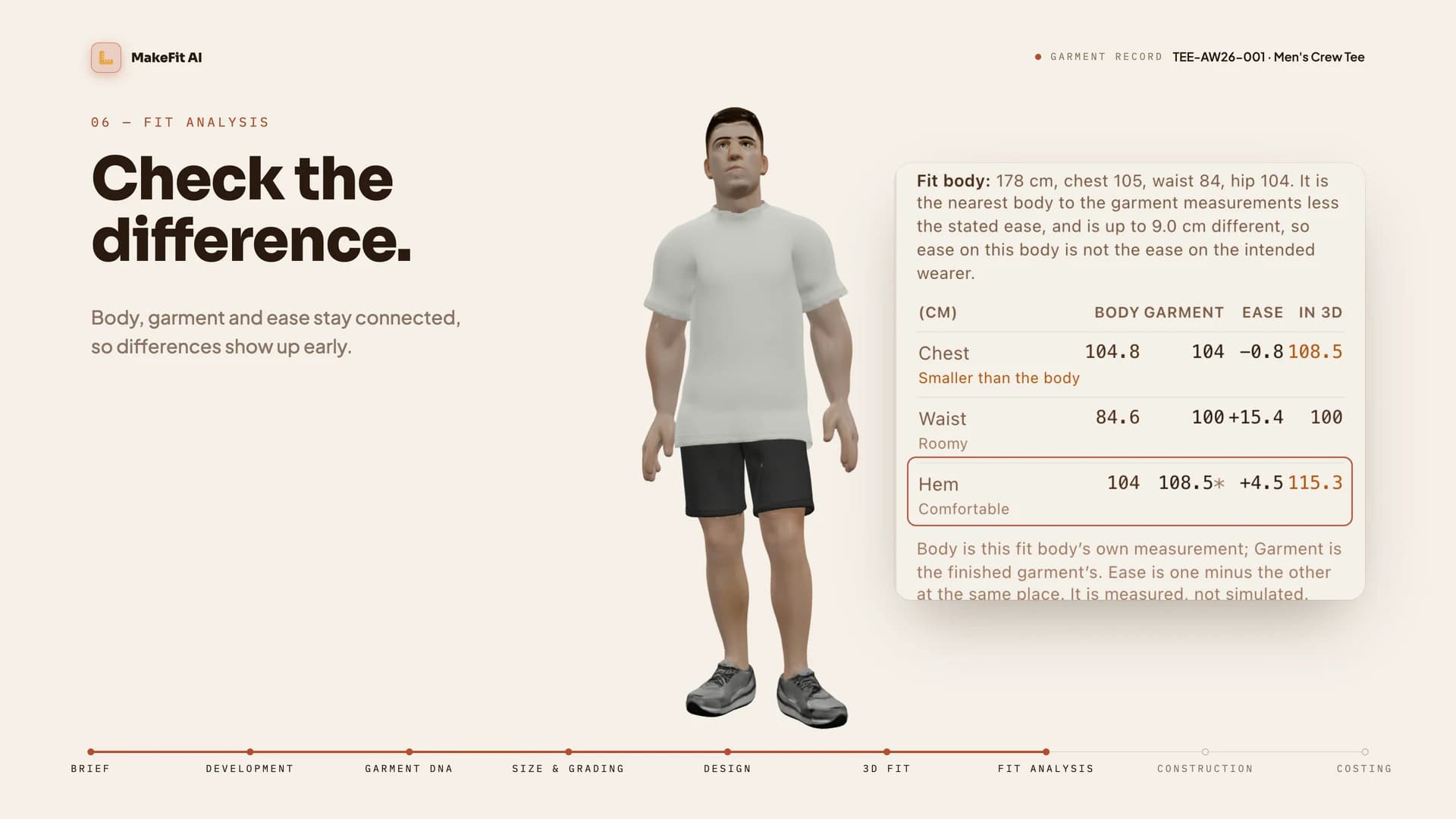
The core challenge was making an AI process feel simple and trustworthy to a consumer who has no interest in how the technology works. A user visiting a clothing retailer’s product page does not want to engage with a complex measurement tool. They want a quick, confident answer: will this fit me?
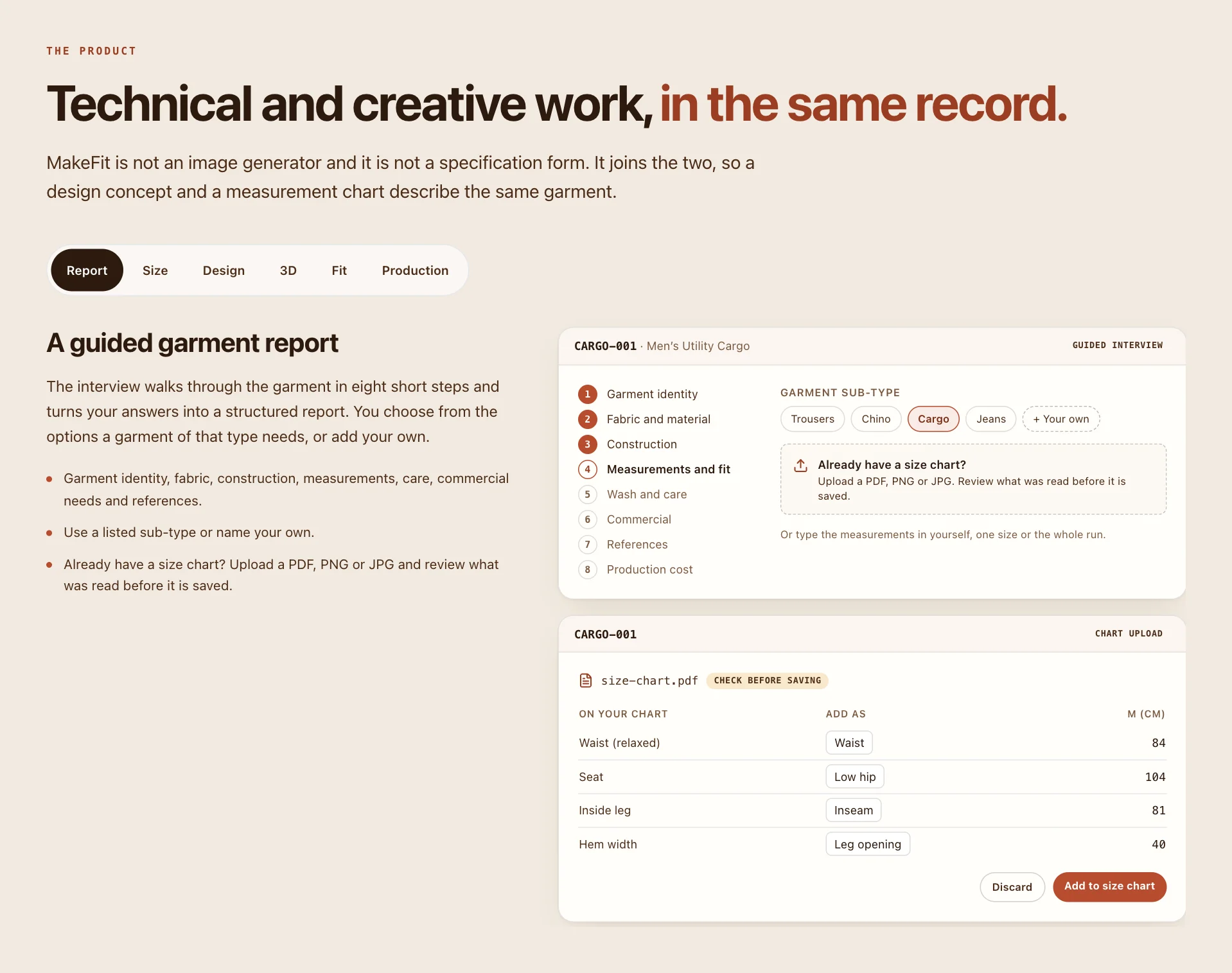
I designed the user flow to minimise friction at every step. The interface guides a user through inputting their measurements or body data in as few steps as possible, processes the fit assessment invisibly, and returns a clear, plain-language result with a confidence indicator. The visual design was built to integrate cleanly with retail environments rather than standing out as a third-party widget, because trust in the fit recommendation depends partly on it feeling native to the shopping experience.
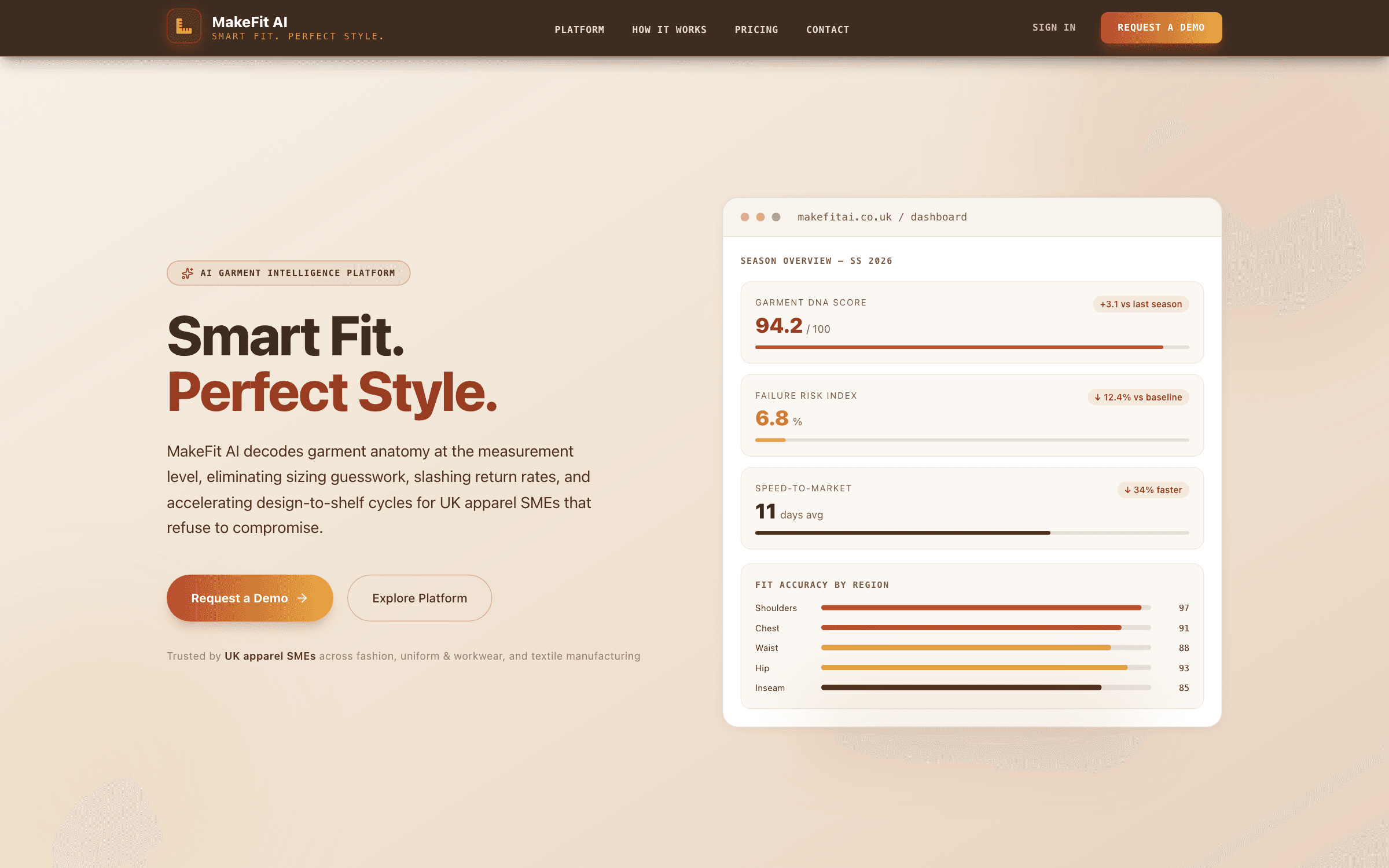
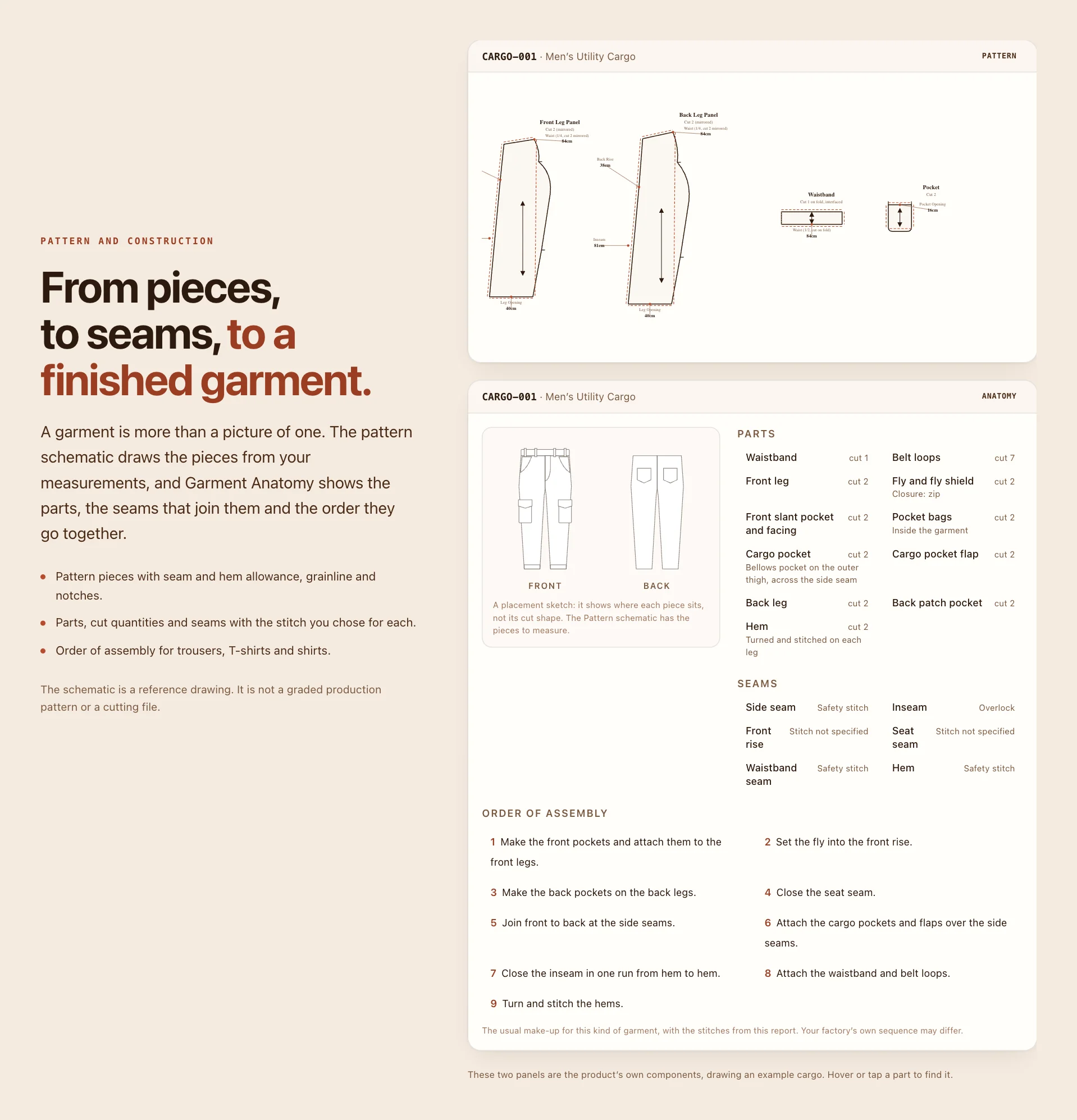
For the retailer-facing side of the platform, I designed a dashboard for managing product fit data, monitoring return rates, and reviewing fit performance by garment. This required a different design register entirely: data-dense, efficient, and built for repeat professional use rather than occasional consumer use.
MOTION DESIGN AND BRAND COMMUNICATION
In addition to the product interface, I led the motion design for MakeFit AI’s promotional video content. I consulted with Vinit Sharma of GraphiiCraft Studios on motion design direction, then developed the visual language independently, producing video work structured around the platform’s market positioning in UK fashion technology.
This was the first time I had worked extensively on motion design for a product I co-founded, and it required thinking about how to communicate an AI concept to a fashion audience rather than a technology audience. The language, visual metaphors, and pacing are all oriented toward the fashion and retail buyer, not the developer.
THE MARKET CONTEXT
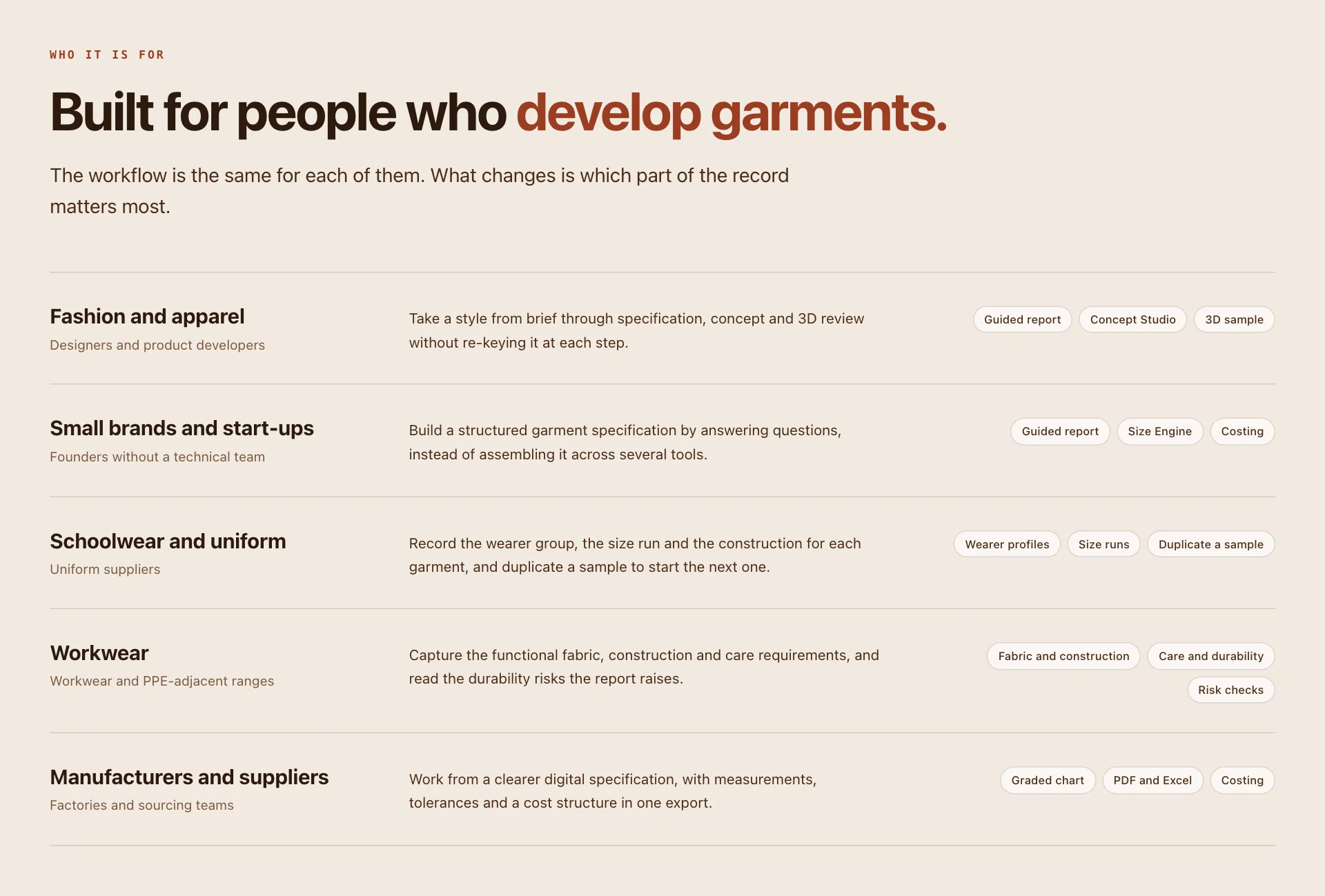
MakeFit AI operates in a growing segment of UK fashion technology. Online clothing returns cost UK retailers an estimated 7 billion pounds annually. AI-powered fit solutions are an emerging category, with adoption growing across mid-market and premium e-commerce. MakeFit AI is positioned to serve this market through direct retailer integration, with Arslan Sultan’s garment expertise providing the domain knowledge that differentiates the fitting model from generic size-matching tools.
The platform is live at makefitai.co.uk.
WHAT THIS PROJECT DEMONSTRATES
MakeFit AI is the project where I moved from designer to co-founder. The design decisions I made here were not in response to a brief from a client. They were strategic product decisions made in partnership with a domain expert, aimed at a specific commercial market. Designing for AI-driven functionality, for dual user types (consumer and retailer), and for a UK fashion audience required a different kind of thinking than client work. It is the project where I most clearly see myself operating as a product thinker rather than a service provider.
Co-founder and Lead Designer | UI/UX, Interaction Design, Motion Design