
UI/UX Design | Enterprise Software | Rural Development | Figma
Designing a Bilingual ERP System for a Rural Cooperative: Sahakari Mandali
Lead UI/UX Designer | End-to-end Figma design across 13 modules
Pankajkumar Mori, Founder and Director
THE PROBLEM
Shivshakti Vikas Mandal is a government-registered rural savings and loan cooperative based in Pethapur, Gujarat. Like many such organisations operating in rural India, it managed its entire operation on paper: handwritten ledgers tracking member savings, loan disbursements, interest calculations, repayment schedules, collections, and staff records.
The paper-based system created compounding problems. Records were prone to error and difficult to audit. Calculating reducing-balance interest manually across multiple active loans was time-consuming and inconsistent. Producing reports for the registrar required assembling data from multiple physical books. And as membership grew, the administrative burden on a small staff became increasingly unmanageable.
The organisation needed a system that could replace its paper processes entirely, be operated by staff with limited digital experience, and serve members from a community where Gujarati is the primary language.
THE CONTEXT
I came to this project through a mutual connection in the local community, who identified that the cooperative’s operational challenges were exactly the kind of problem that good software design could solve. This was not a commercial tender or a corporate brief. It was a direct need in a real community, brought to me personally.
My collaborator on the technical side was Vinit Sharma, Founder and Lead Developer of GraphiiCraft Studios, who built and deployed the system from my designs. My responsibility was the complete UI/UX design: every screen, every interaction, every decision about how the system would look and behave.
MY ROLE
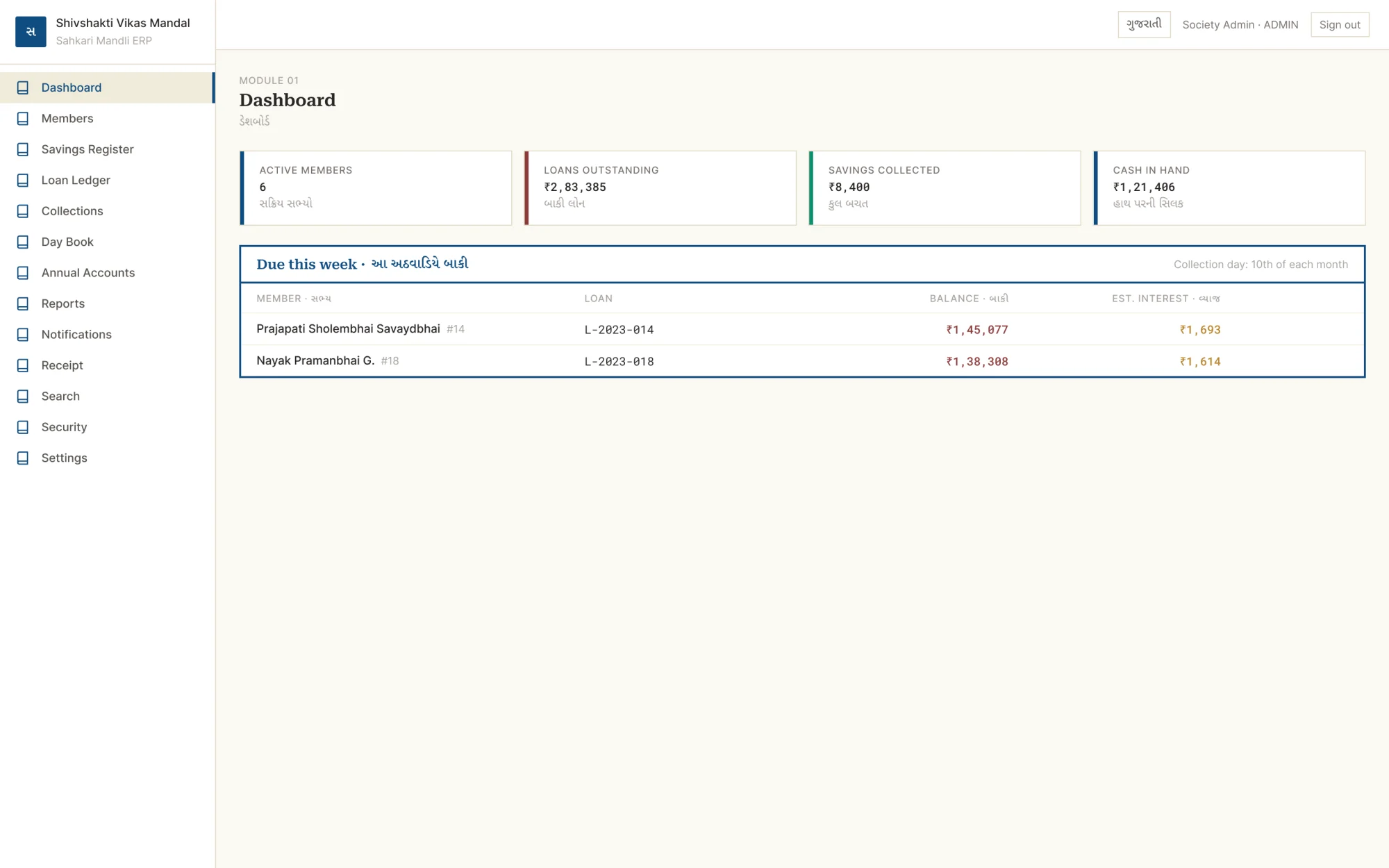
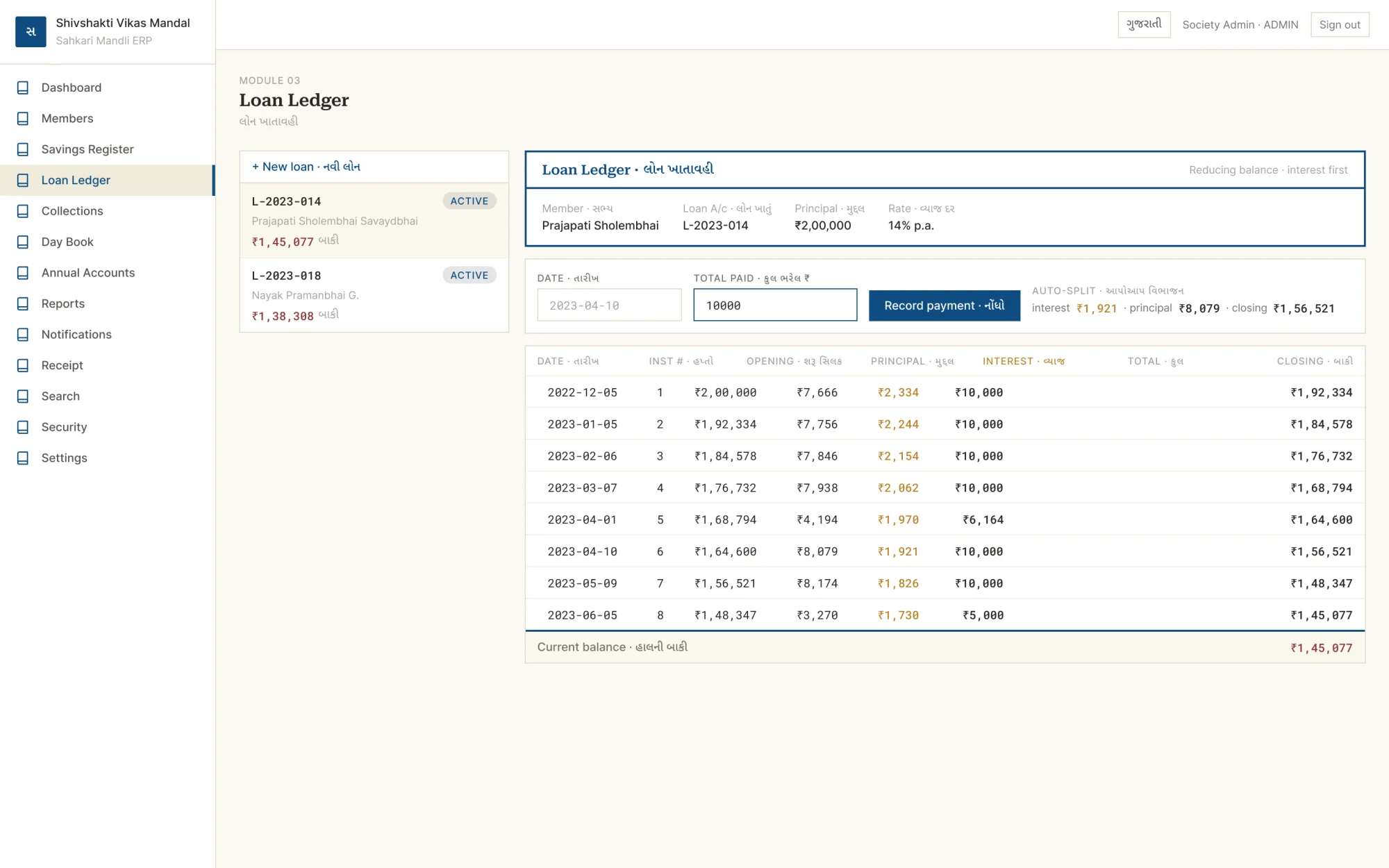
I designed the full interface for a web-based ERP system spanning thirteen modules in Figma: member management, savings ledger, loan ledger with reducing-balance interest calculations, collections, day book, cash book, annual accounts, reporting, receipt generation, staff management, security and access control, and a system administration module.
Every screen was designed from scratch. There was no existing system to reference, no design template to adapt. The brief was entirely functional: replace what the paper ledgers do, and make it workable for the people who will actually use it.
THE KEY DESIGN DECISIONS
The most significant decision I made on this project was one I made independently, without being asked: I designed the entire interface in both Gujarati and English simultaneously.
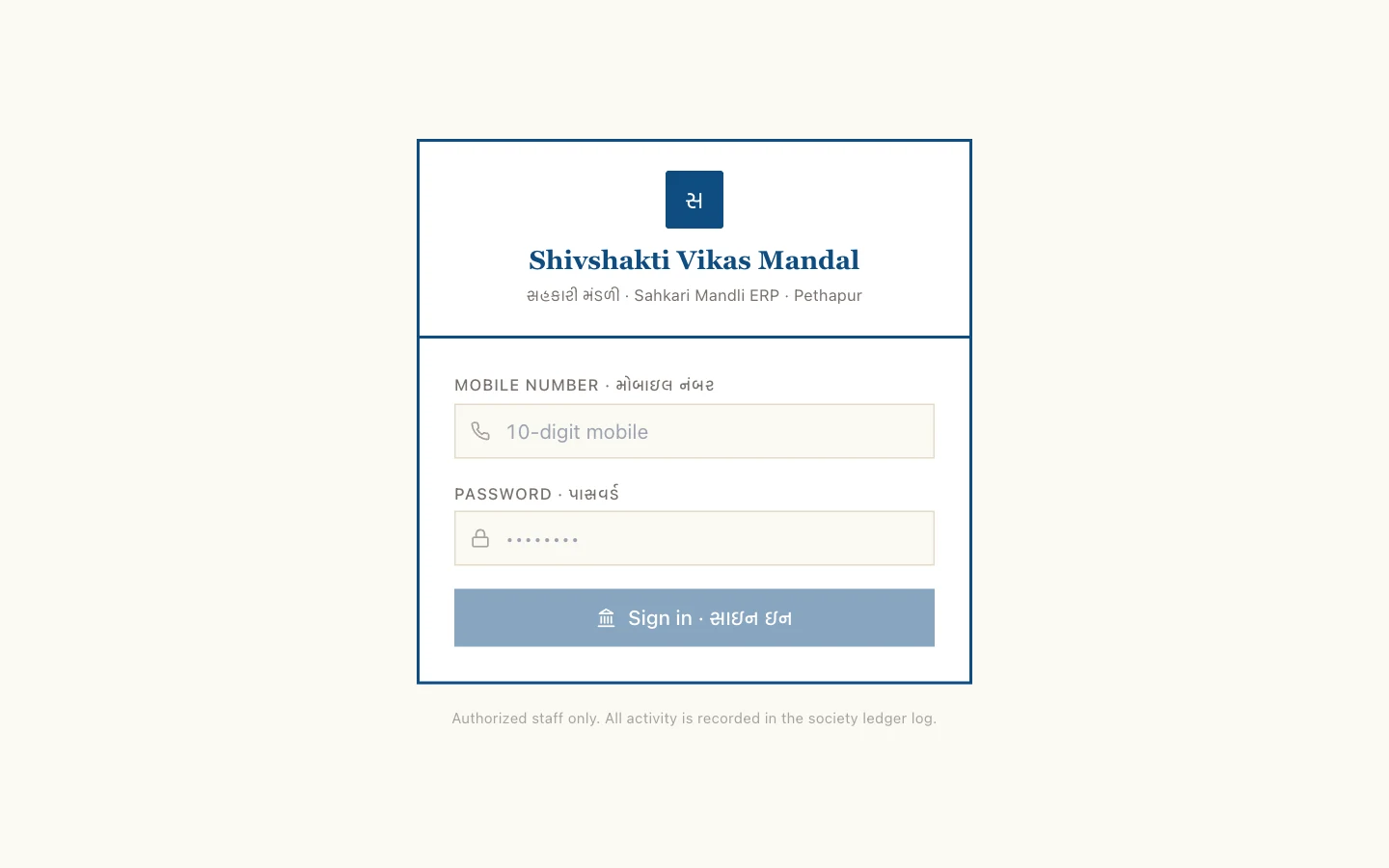
The end users, both staff and members, are predominantly Gujarati-speaking. An English-only interface would have created a barrier to adoption that no amount of training could fully overcome. By designing bilingual screens from the outset, I ensured that every label, every status message, every navigation element, and every data entry field was legible to the people using it in their own language, while remaining accessible to anyone working in English.
This decision added significant complexity to the design work. Every screen had to be laid out to accommodate both scripts, with attention to text length differences, character rendering, and the visual weight of Gujarati script relative to Latin characters. It was the right call, and it was mine to make.
Beyond the bilingual interface, the design prioritised clarity over sophistication throughout. Cooperative staff are not software professionals. The system had to be learnable without formal training, recoverable from errors without IT support, and navigable by someone who might use it a few times a week rather than every hour of every day. I applied progressive disclosure throughout, surfacing only what each user type needed at each stage rather than presenting the full complexity of the system at once.
THE OUTCOME
Vinit Sharma built and deployed the system directly from the Figma designs, requiring minimal clarification during development. For a developer, a design that translates directly into buildable code without back-and-forth is not the norm. It reflects a design process that accounts for implementation from the start, not just visual appearance.
The system was successfully deployed to a working environment. Full production rollout is pending the client’s internal sign-off processes.
WHAT THIS PROJECT DEMONSTRATES
Sahakari Mandali is the project that most clearly demonstrates user-centred thinking applied under real constraints. The users were not tech-savvy professionals in a well-resourced organisation. They were cooperative staff in a rural community, working with a system that would directly affect the financial records of their members. Getting the design wrong had real consequences.
The bilingual interface decision, made independently and applied systematically across thirteen modules, is the single clearest example in my work of identifying a user need that the client had not articulated and acting on it without being asked. That is not a junior designer’s instinct. It is the instinct of someone who understands that design serves people, not requirements documents.
Lead UI/UX Designer | End-to-end Figma design across 13 modules